
The Biggest Mistakes After Car Accidents to Avoid
Stop, check for injuries, call 911, and preserve evidence. Those four actions in the first two minutes after a crash protect your health, your legal rights, and your ability to recover fair compensation. Vehicle collisions occur in large numbers each year, and a significant share of injured people walk away with less than they deserve, not because their case was weak, but because they made avoidable mistakes at the scene or in the days that followed.
Here is the emergency checklist to follow before anything else:
- Move to safety if you can do so without making injuries worse.
- Call 911 immediately, even for minor collisions.
- Check yourself and others for injuries. Do not move anyone who may have a spinal injury.
- Turn on hazard lights and set out flares or warning triangles if available.
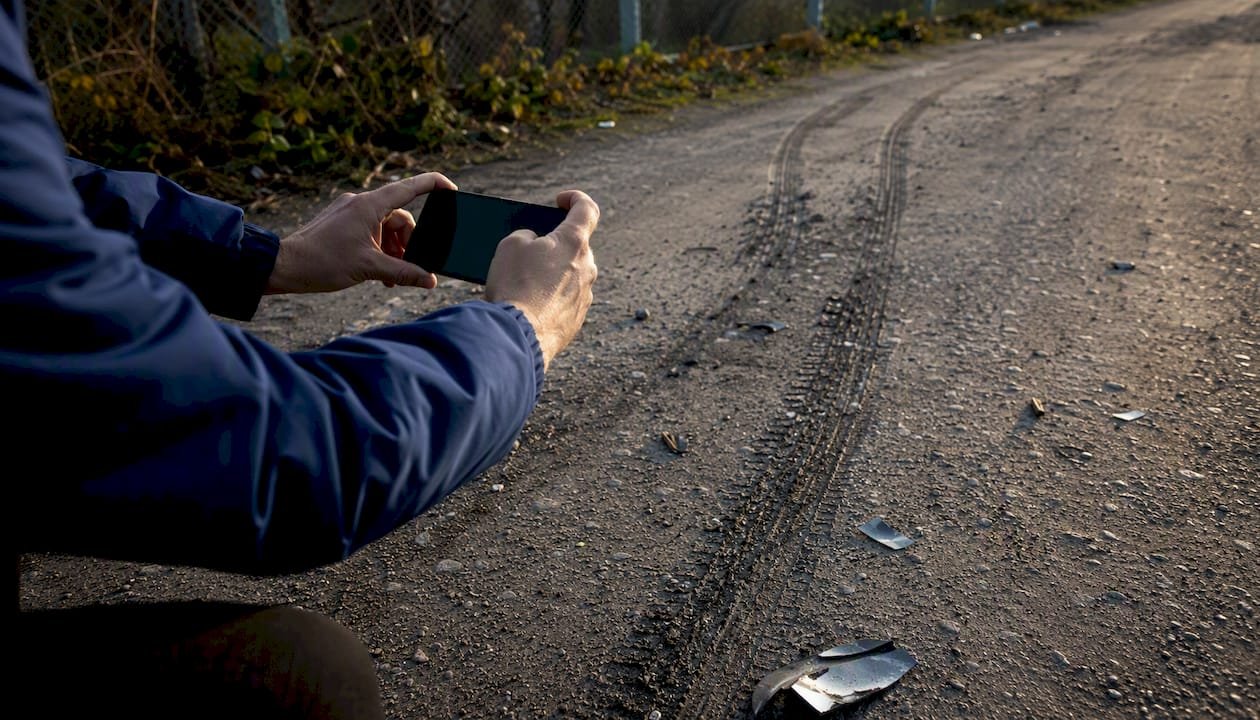
- Photograph the scene before vehicles are moved: damage, positions, skid marks, road signs, and any visible injuries.
- Exchange name, license number, insurance carrier, and policy number with the other driver.
- Collect names and phone numbers from any witnesses.
- Wait for police to arrive and get the responding officer’s badge number.
Pro Tip: Ask the other driver “Are you okay?” to show concern. Never say “I’m sorry” or “I didn’t see you” — those phrases can be treated as admissions of fault in a liability assessment.
Table of Contents
- What mistakes do people make at the crash scene?
- What should you do in the hours and days after a crash?
- How do insurance company mistakes hurt your claim?
- What deadlines and compensation factors should you know?
- What should you actually say to police, other drivers, and insurers?
- Why these steps protect your claim, from an attorney’s perspective
- What the right approach actually looks like
- Ready for a free case review with Stubbornattorney?
- Sources
- FAQ
What mistakes do people make at the crash scene?
The scene of a collision is where most post-accident legal mistakes begin, and many of them are irreversible. Common on-scene errors include failing to exchange information, admitting fault, neglecting to gather evidence, and skipping medical attention — each one capable of weakening a later claim.
Leaving the scene before exchanging required information is not just a tactical error. In every U.S. state, it is a crime. Even if you believe the damage is minor, stay until police arrive or, at minimum, until you have exchanged contact and insurance details with the other driver.
Common on-scene errors to avoid:
- Not calling police when anyone is injured or when the road is blocked
- Moving vehicles before photographing their positions
- Failing to photograph skid marks, debris, road conditions, and surrounding signage
- Accepting the other driver’s verbal account without getting their insurance card
- Apologizing or speculating about what caused the crash
- Ignoring witnesses who may leave before you get their contact information
Photo evidence tips that most people miss:
- Shoot from four angles around each vehicle, not just the point of impact
- Step back far enough to capture the full road scene, including lane markings and traffic signals
- Photograph skid marks from end to start, not just where they stop
- Take close-ups of any visible injuries on yourself or passengers
- Check that your phone’s timestamp is on — it creates a time-stamped record that can matter in disputes
| Do at the scene | Avoid at the scene |
|---|---|
| Call 911 and wait for police | Leaving before officers arrive |
| Photograph everything before moving vehicles | Moving vehicles before documenting positions |
| Exchange insurance and license info | Admitting fault or apologizing |
| Collect witness names and numbers | Giving a detailed statement about cause |
| Note the officer’s badge number | Signing anything at the scene |
Official guidance consistently emphasizes stopping at the scene, checking for injuries, exchanging details, and avoiding apologies that may be used as admissions of fault. That guidance applies equally under U.S. law.
What should you do in the hours and days after a crash?
The scene is behind you, but the window for protecting your claim stays open for days. What you do in the next 48–72 hours often determines whether your medical expenses and lost wages are fully covered.
The most costly post-scene error is delaying medical care. Some serious injuries after blunt trauma, including internal bleeding, may not produce immediate symptoms. A prompt medical visit does two things: it catches hidden injuries before they become life-threatening, and it creates a dated medical record that links your injuries to the crash. Without that record, an insurer can argue your injuries were pre-existing or unrelated.
Post-scene errors that reduce compensation:
- Waiting days to see a doctor because you “feel fine”
- Failing to describe every symptom to your treating physician, even minor ones
- Deleting or editing photos from the scene
- Posting about the accident on social media
- Failing to keep receipts for towing, rental cars, prescriptions, and any out-of-pocket costs
- Not preserving your damaged vehicle before repairs begin
Your 48–72 hour checklist:
- Seek medical evaluation the same day, even if symptoms seem minor.
- Request a copy of the police report or note the report number, date, time, and officer badge number so you can retrieve it later.
- Write down your own account of the crash while details are fresh: road conditions, speed, what you saw, what was said.
- Notify your insurance company that the accident occurred. Keep it factual and brief.
- Photograph your vehicle again before any repairs begin.
- Start a folder, physical or digital, for all accident-related documents.
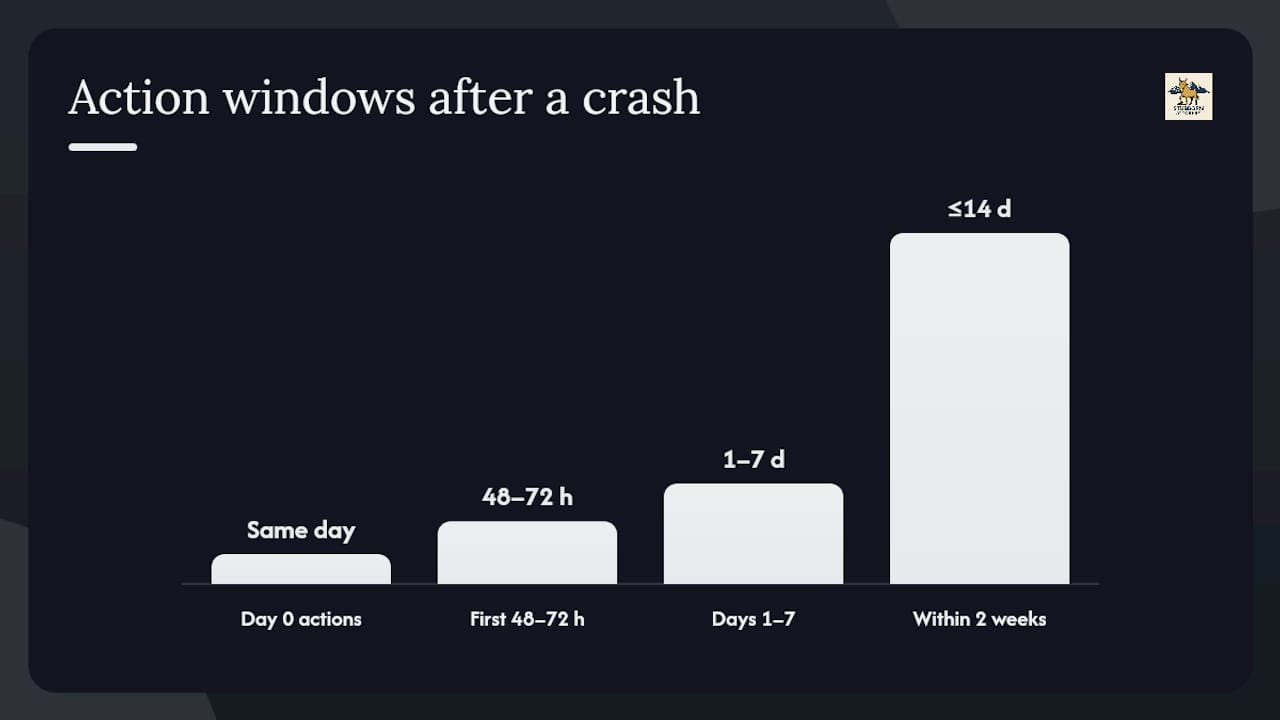
Timeline at a glance:
- Day 0: Medical evaluation, preserve scene photos, notify insurer of the basic facts.
- Days 1–7: Obtain police report, document all symptoms and expenses, avoid social media posts about the crash.
- Within two weeks: Follow up with your doctor, collect repair estimates, consult an attorney if you have injuries or disputed fault.
State rules can impose short windows for certain benefits. Colorado Springs ’s PIP program, for example, often requires medical treatment within 14 days to qualify for PIP benefits. Check your state’s specific deadlines early.
How do insurance company mistakes hurt your claim?
Insurance adjusters are trained negotiators. Their job is to close claims efficiently, and “efficiently” usually means for less than full value. The errors people make in early insurer contact are among the most expensive car accident claims pitfalls there are.
The recorded statement trap. An adjuster may call within hours of the crash and ask for a recorded statement “just to get your side.” You are not legally required to give one to the other driver’s insurer, and doing so before you understand the full extent of your injuries is a serious risk. Statements made before a medical diagnosis can be used to cap your claim at a lower figure.
Common insurance claim errors:
- Giving a recorded statement to the opposing insurer without legal advice
- Accepting the first settlement offer before all medical treatment is complete
- Signing a broad medical-release authorization that gives the insurer access to your entire medical history
- Providing unnecessary detail about your daily routine, pre-existing conditions, or prior accidents
- Ignoring medical liens from health insurers or providers that must be resolved before settlement
Pro Tip: When you call to report the accident to your own insurer, stick to neutral facts: date, time, location, the other driver’s name and insurance information, and that you are seeking medical attention. Nothing more. You can always add detail later; you cannot take back what you have already said.
Adjusters frequently challenge claims by labeling injuries “minimal” or “pre-existing.” Thorough scene photos, including skid marks and debris, help counter those arguments. Understanding common auto insurance gaps in your own policy before a claim arises is equally useful, because coverage gaps are often discovered at the worst possible moment.
What deadlines and compensation factors should you know?
Every personal injury claim in the United States is subject to a statute of limitations, the legal deadline by which you must file a lawsuit or permanently lose the right to do so. Most states set this window at two to three years from the date of the accident, but exceptions exist for minors, government vehicles, and cases where injuries were not discovered immediately. Missing the deadline ends your case, regardless of how strong it is.
Main factors that affect compensation value:
- Medical records and bills: The foundation of any claim. Gaps in treatment give insurers grounds to argue your injuries were not serious.
- Lost wages: Document missed work with employer letters and pay stubs from the start.
- Pain and suffering: Calculated differently by state, but a consistent symptom journal strengthens this element significantly.
- Liability clarity: Clear evidence of the other driver’s fault, such as a police report citing a traffic violation, raises claim value.
- Comparative fault rules: Most states reduce your recovery by your percentage of fault. In some states, being more than 50% at fault bars recovery entirely. See car accident liability factors for a detailed breakdown.
Pro Tip: If you did not get a copy of the police report at the scene, you can usually obtain it later by contacting the responding station with the crash date, time, location, or the officer’s badge number. The Illinois State Bar Association notes this as a standard post-scene step — most jurisdictions follow similar procedures.
Keep a running log of every accident-related expense and every communication with insurers, adjusters, and medical providers. That log becomes evidence.
What should you actually say to police, other drivers, and insurers?
Most people either say too much or freeze entirely. Neither helps. What you need are short, factual statements that satisfy your legal duties without creating admissions.
Script: Reporting to 911
“I’ve been in a car accident at [intersection or address]. There are [number] people involved. [Someone appears to be injured / No one appears injured]. Please send police and an ambulance.”
Script: Talking to the other driver
“I’d like to exchange insurance and contact information. Here is my card.” Then stop. Do not discuss who was at fault, how fast anyone was going, or whether you are hurt.
Script: Notifying your own insurer
“I’m calling to report an accident that occurred on [date] at approximately [time] at [location]. The other driver’s name is [name] and their insurer is [company]. I am currently seeking medical attention.”
Phrases to avoid and why:
- “I’m sorry” — treated as an admission of fault in liability assessments.
- “I didn’t see them” — establishes that you were not observing the road.
- “I think I’m okay” — can be used to argue you had no injuries at the time.
- “It was probably my fault” — self-assigns liability before any investigation.
- “I wasn’t going that fast” — implies speed was a factor and invites further questioning.
The legal reason behind each rule is the same: statements made at the scene or in early insurer calls are recorded, documented, and used in liability assessments. Adjusters and opposing attorneys review them looking for inconsistencies or admissions. Keep every statement short, factual, and limited to what you directly observed.
Why these steps protect your claim, from an attorney’s perspective
Ryan Malnar is a Colorado personal injury attorney and former federal claims adjudicator, which means he has evaluated claims from both sides of the table. That background shapes how Stubbornattorney approaches every case.
The pattern that appears repeatedly in injury cases is this: clients who documented the scene thoroughly and sought medical care the same day have significantly stronger claims than those who waited, even when the underlying injuries were similar. A dated photograph of skid marks or a same-day emergency room record can be the difference between a disputed claim and a settled one.
Consider a scenario that reflects a common pattern: a client involved in a rear-end collision felt only mild neck stiffness at the scene and did not call police because the damage looked minor. Three days later, the stiffness became debilitating. Because there was no police report, no scene photos, and a three-day gap before medical treatment, the insurer argued the injury was unrelated to the crash. Cases like this are far harder to resolve than they should be.
How Stubbornattorney helps:
- Reviews all scene photos, medical records, and police reports to identify gaps before the insurer does
- Handles all communication with adjusters so clients do not inadvertently damage their claims
- Tracks filing deadlines and state-specific procedural requirements
- Negotiates from a position of documented evidence, not just verbal accounts
- Works on a contingency-fee basis, meaning no fee unless compensation is recovered
Knowing when to hire an automobile accident attorney is itself one of the most important decisions after a crash. If you have injuries, disputed fault, or any complexity in the claim, that answer is usually: sooner than you think.
What the right approach actually looks like
The checklist in this article is not complicated. Stop, document, get medical care, say only what is factually necessary, and call an attorney before signing anything. What makes it hard is that crashes are disorienting, and the pressure to seem cooperative or to “just handle it” without involving lawyers is real.
The mule on our logo is not a joke. Stubbornness, in the right context, means not letting go of a client’s claim when an insurer pushes back with a lowball offer or a “pre-existing condition” argument. That is the quality that actually moves cases forward.
Ready for a free case review with Stubbornattorney?
If you were injured in a Colorado car accident, the next step is a free case evaluation, no upfront cost, no obligation. Stubbornattorney works on a contingency-fee basis: you pay nothing unless compensation is recovered in your case.
What to bring to your consultation:
- The police report or report number
- Photos from the scene and of your vehicle
- Medical records and bills received so far
- Repair estimates or towing receipts
- Any written or recorded communications with insurers
Ryan Malnar and the Stubbornattorney team serve injured clients across Colorado, including Colorado Springs, Pueblo, Burlington, and surrounding communities. See what legal representation actually does for your claim, then request your free case review to get started.
This article provides general legal information, not legal advice. Laws vary by state. Consult a qualified attorney to understand how the rules apply to your specific situation.
Sources
- Your Guide to Auto Accidents | Illinois State Bar Association
- Common Mistakes To Avoid After A Car Accident | BANA LAW
- 10 Common Mistakes to Avoid After a Car Accident in Colorado Springs
- Car accident advice – don’t get caught out | RAC Drive
- My
- Car Accident Claims | What To Do After Auto Crash – The Taylor Law Firm
This article is general information, not a substitute for advice from a qualified lawyer. Consult a qualified legal professional about your own circumstances before acting on anything here.
FAQ
What should you not say to insurance after an accident?
Avoid apologies, causal statements (“I didn’t see them”), and any estimate of your injuries (“I think I’m fine”). Stick to factual details: date, time, location, and the other driver’s information. You are not required to give a recorded statement to the opposing insurer.
What is negligence in a car accident?
Negligence means a driver failed to exercise reasonable care, such as running a red light or following too closely, and that failure caused the crash and your injuries. Establishing the other driver’s negligence is the foundation of most personal injury claims.
How much compensation can you get from a car crash?
Compensation depends on medical expenses, lost wages, pain and suffering, and the clarity of liability evidence. There is no fixed amount; cases with thorough documentation, clear fault, and complete medical records tend to recover more. See key factors that affect settlement amounts for a detailed breakdown.
What happens if you leave the scene of an accident?
Leaving before exchanging required information is a crime in every U.S. state, ranging from a misdemeanor to a felony depending on whether injuries occurred. It also severely damages any civil claim you might otherwise have.
When should you contact a personal injury attorney after a crash?
Contact an attorney as soon as you have injuries, disputed fault, or any insurer pressure to sign documents or accept a settlement. The earlier an attorney reviews your evidence and communications, the more options remain available to protect your claim.