

Why Choose a Client-Focused Lawyer After a Car Accident
A client-focused lawyer is defined as an attorney who treats your personal experience, fears, and goals as equally important as the legal outcome itself. After a car accident, you are not just managing a legal claim. You are managing pain, stress, insurance calls, and uncertainty about your future. The right attorney addresses all of it. Research confirms that how you are treated carries as much weight as winning your case. Understanding why choose a client-focused lawyer means understanding that legal skill alone is not enough. Advocacy, communication, and genuine care are what separate good representation from great representation.
Why choose a client-focused lawyer after a car accident?
Client-centered lawyering is the recognized industry term for legal practice that puts your experience at the center of every decision. It is not a marketing phrase. It is a documented approach that changes how attorneys communicate, bill, and prioritize your case. The difference between a transactional attorney and a client-centered one shows up in the first phone call.

A transactional attorney collects your facts and moves to the next task. A client-centered attorney asks what you are most worried about, explains what happens next, and confirms that your goals are understood before any strategy is set. That distinction matters enormously when you are recovering from an accident and trying to make sense of a process you have never navigated before.
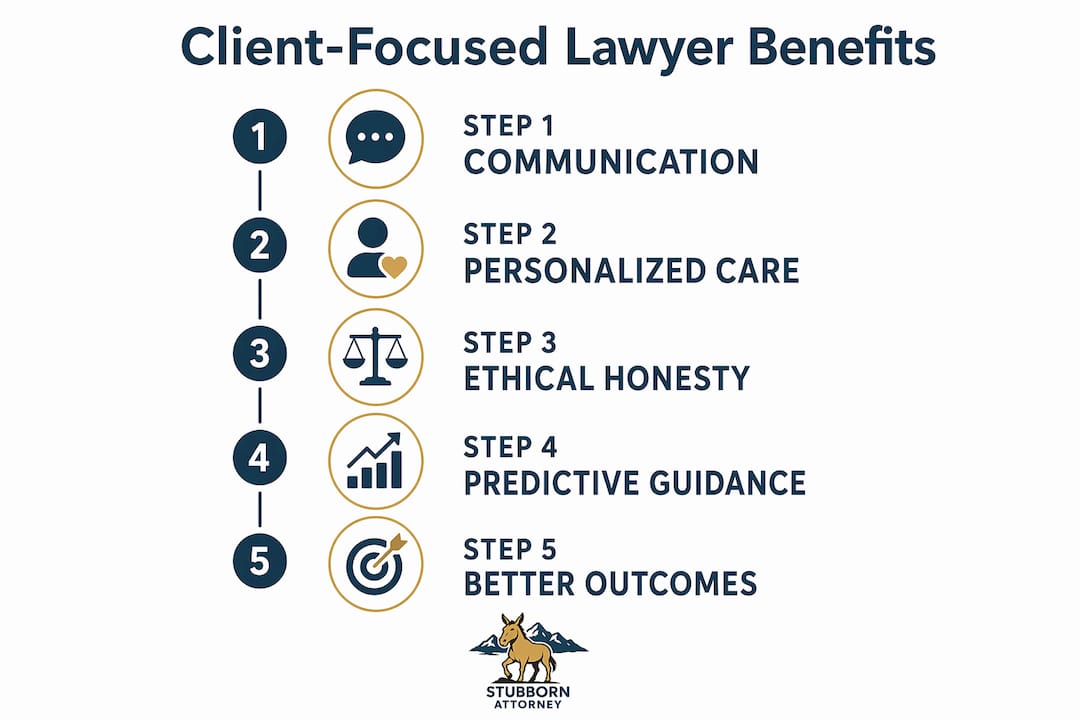
The client-first mindset involves predicting friction points before they happen, providing updates before you have to ask, and framing every legal option in terms of what it means for your life. That is not a soft skill. It is a discipline that requires consistent effort throughout the entire case.
Client-centered attorneys also maintain ethical honesty about uncertainty. They do not promise outcomes they cannot guarantee. That honesty, delivered with empathy, is what builds the kind of trust that carries you through a long and stressful legal process.
What client-focused habits look like in practice
A client-focused attorney demonstrates these behaviors consistently:
- Proactive updates: You receive case status information before you feel the need to call and ask.
- Plain language explanations: Legal terms are translated into clear choices with real tradeoffs explained.
- Goal alignment: Your attorney confirms your priorities, whether that is speed, maximum compensation, or avoiding a trial, and builds strategy around them.
- Predictable access: You know who to call, when to expect a response, and that continuity is maintained throughout your case.
- Empathetic listening: Your attorney acknowledges the emotional weight of your situation, not just the legal facts.
Pro Tip: Ask any attorney you interview how they handle case updates. A client-focused lawyer will describe a specific system. A transactional one will give you a vague answer about being “available.”
How does client focus affect legal outcomes and satisfaction?
Client focus directly improves both satisfaction and the likelihood you will recommend your attorney to others. The 2026 Legal CX Report found that clients who prioritize personal treatment alongside legal outcome report higher satisfaction and loyalty, with 49% willing to return compared to 39% who focus only on outcome. That 10-point gap represents real people who felt genuinely supported, not just legally represented.
The economic signal is even stronger at the firm level. Law firms that lead on client service generate profit margins 9 to 15 times higher than typical firms. That result does not come from winning more cases. It comes from clients who trust their attorneys, refer their friends, and return when they need help again.
“Clients experience the legal outcome and the relationship as a single unified experience. Firms that control how clients are treated shape that perception reliably — and profitably.”
2026 Legal CX Report
Referrals are the clearest proof that client experience drives growth. 47% of new law firm clients come through referrals, while only 5% come from traditional advertising. Referrals happen when someone trusts their attorney enough to put their own reputation behind the recommendation. That level of trust does not come from a good settlement alone. It comes from feeling heard, respected, and supported throughout the process.
Clients also judge legal service quality through emotional experience because they lack the legal expertise to evaluate technical work. Emotional experience drives satisfaction as much as legal skill does. This means that even a favorable settlement can leave a client dissatisfied if they felt ignored or confused along the way. The inverse is also true. A client who felt genuinely supported may remain loyal even when outcomes are imperfect.
How communication and emotional connection define great legal representation
Clients hire lawyers for clarity and honesty, not credentials alone. Attorney David Achord, drawing on 20 years of experience, identifies communication as the core trust-builder in any attorney-client relationship. Credentials get you in the door. Communication keeps you there. After a car accident, you need an attorney who can explain a complex insurance dispute in plain terms, not one who impresses you with legal vocabulary you cannot act on.
Clients also need what legal marketing consultant Strawberry Nevill calls a sense of consortium. This means feeling understood, supported, and included in the process. When clients feel like partners rather than case numbers, their satisfaction rises independent of the legal result. That feeling does not happen by accident. It requires consistent, deliberate communication from the attorney’s side.
Common communication failures to watch for
Many attorneys fall into predictable patterns that erode client trust:
- Disappearing after intake: The attorney is attentive during the first meeting, then unreachable for weeks.
- Jargon without translation: Legal terms are used without explanation, leaving clients confused about their own case.
- Reactive updates only: Clients only hear from their attorney when they call first, creating anxiety and frustration.
- Vague timelines: No clear sense of what happens next or when, which amplifies stress during an already difficult time.
Consistent small actions build trust over the lifetime of a case. Returning calls on time, explaining decisions, and acknowledging delays are not extras. They are the foundation of a working attorney-client relationship.
Pro Tip: During your first consultation, notice whether the attorney explains your options in terms of your goals or in terms of legal procedure. Client-focused attorneys frame everything around what matters to you.
Large firms often struggle with continuity. Clients in large firms frequently feel frustrated by rotating staff and lack of direct access to their attorney. A client-centered attorney, by contrast, provides predictable access and steady communication from intake to resolution. For car accident victims already dealing with physical recovery, that consistency is not a luxury. It is a necessity. You can read more about what this looks like in practice in Stubbornattorney’s guide to compassion in legal representation.
How to choose a client-focused lawyer after a car accident
Identifying a client-centered attorney requires asking specific questions and watching for specific behaviors, not just reviewing credentials. The right attorney will demonstrate their approach before you sign anything.
Key questions to ask during a consultation
- “How do you keep clients updated on their case?” A client-focused attorney describes a specific system, such as weekly emails or scheduled calls, not a vague promise to be available.
- “Who will I speak with when I have questions?” Direct access to your attorney, or a clearly named point of contact, signals a client-centered practice.
- “How do you handle unexpected developments in a case?” The answer reveals whether the attorney communicates proactively or only when forced to.
- “Can you explain your billing structure?” Transparent, predictable billing removes anxiety about costs and signals honesty throughout the relationship.
- “What do your past clients say about working with you?” Referrals and reviews reflect real client experience, not just legal results.
What to evaluate before you decide
| Evaluation area | What to look for | Red flag |
|---|---|---|
| Communication | Specific update schedule described | Vague “we’ll be in touch” answers |
| Billing | Flat fee or clear contingency terms | Unclear cost structure |
| Access | Named contact person for your case | “Someone on the team will help you” |
| Client focus | Goals discussed before strategy | Strategy presented before goals are confirmed |
| Reputation | Referrals and verified reviews | Only self-reported credentials |
Reviewing an attorney’s top qualities in personal injury lawyers gives you a concrete checklist to apply during your search. The goal is to find someone who treats your case as a priority, not as one file among hundreds. You can also review the consulting a lawyer workflow to understand what a well-structured intake process looks like from the client’s perspective.
What I have learned about client focus after a decade of injury cases
After more than ten years representing injured clients in Colorado, I can tell you the most common mistake people make when choosing an attorney. They focus almost entirely on credentials and win rates. Those things matter. But they do not tell you whether an attorney will call you back, explain your options clearly, or treat your anxiety as a legitimate part of the case.
The clients who feel best served at the end of a case are almost never the ones who got the largest settlement. They are the ones who felt informed, respected, and included throughout the process. When someone understands why a decision was made, even a difficult one, they trust the outcome. When they are left in the dark, even a good result feels hollow.
I have also seen what happens when clients choose attorneys based on advertising alone. They often end up feeling like a case number. Large volume practices can deliver results, but they rarely deliver the kind of personal attention that makes a stressful legal process bearable. The difference between a client who refers three friends and one who never calls again almost always comes down to how they were treated, not what they won.
My advice is direct. Ask hard questions before you hire anyone. Watch how the attorney listens. Notice whether they ask about your goals or jump straight to strategy. The attorney who asks what you are most worried about before explaining what they plan to do is the one worth hiring. That instinct, to understand before acting, is what client-centered lawyering actually looks like in practice.
— Ryan
Stubbornattorney’s approach to client-centered representation
Stubbornattorney was built on the belief that injured people deserve more than legal skill. They deserve an attorney who stays in the fight, communicates clearly, and treats their case with the same persistence a mule brings to a steep mountain trail. Ryan Malnar has settled hundreds of injury cases and recovered millions of dollars for Colorado clients, and every case is handled with direct attorney access and transparent communication. If you were injured in a car accident and want to understand your options, a free case review is the right first step. You can also learn more about how to choose representation that actually fights for you.
FAQ
What is a client-focused lawyer?
A client-focused lawyer is an attorney who prioritizes your personal experience, goals, and communication needs alongside the legal outcome. The recognized industry term is client-centered lawyering, and it involves proactive updates, plain language explanations, and empathetic support throughout your case.
Why does client focus matter more than credentials alone?
Clients judge legal service quality through emotional experience because they lack the expertise to evaluate technical legal work. Research shows that how you are treated influences satisfaction and loyalty as much as winning does.
How do I know if a lawyer is truly client-focused?
Ask how they handle case updates and who your direct contact will be. A client-focused attorney describes a specific communication system and confirms your goals before presenting any strategy.
Does client-centered representation lead to better legal outcomes?
Client-focused firms generate significantly higher client retention and referrals, which reflects deeper trust in the attorney-client relationship. Clients who feel supported are also more likely to follow their attorney’s guidance, which strengthens case strategy.
What is the biggest mistake people make when choosing a lawyer after a car accident?
Most people focus on credentials and advertising rather than communication habits and responsiveness. The attorney who asks about your goals and explains your options clearly is more likely to serve you well than one who leads with their win rate.